
Which Kitchen Upgrades Provide the Best Return on Investment?
The kitchen upgrades that provide the best return on investment depend on the condition and functionality of the existing kitchen. There is no single upgrade that will be the best choice for every home.
Dated or damaged cabinetry may need to be replaced first. However, if the cabinets are in excellent condition, updating the countertops or appliances may create a greater improvement without requiring a complete renovation.
The best approach is to identify the weakest parts of the existing kitchen and direct the remodeling budget toward the improvements that will make the greatest difference.
Start With the Condition of the Existing Kitchen
Before choosing materials or appliances, examine the condition of the entire kitchen.
Consider the following questions:
Are the cabinet boxes and doors in good condition?
Does the existing layout function well?
Is there enough storage?
Are the countertops damaged or outdated?
Are the appliances functioning properly?
Is the kitchen well lit?
Does the overall design match the quality of the home?
Are any materials damaged beyond reasonable repair?
These questions help determine whether the kitchen needs a complete remodel or a smaller group of targeted improvements.
A full renovation may not provide the best return when most of the kitchen is already in excellent condition. At the same time, making small cosmetic changes may not be enough when the cabinetry is damaged, the storage is inadequate, or the layout does not function properly.
When Does Replacing Cabinetry Provide the Best Return?
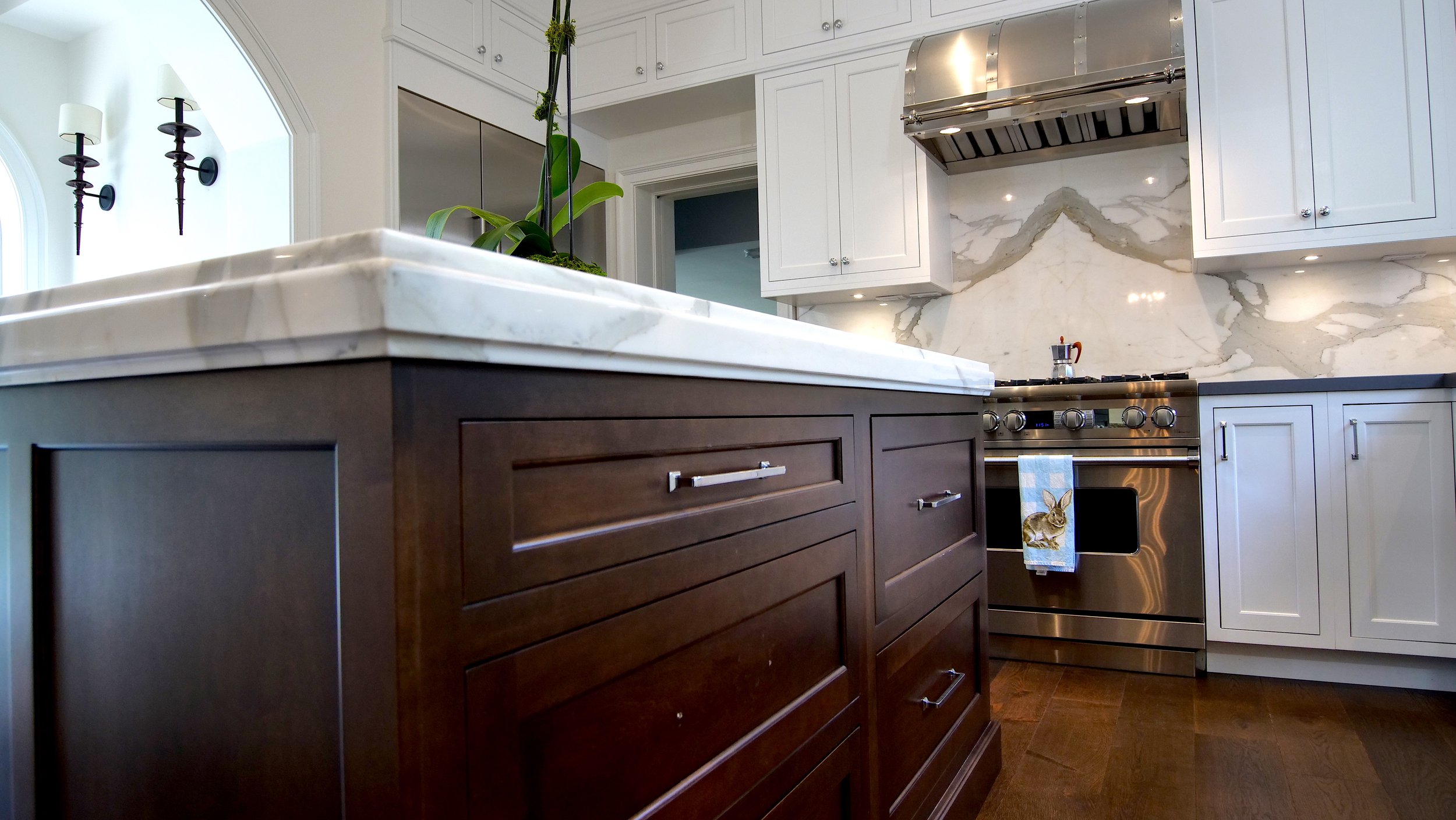
Cabinetry should be one of the first priorities when it is damaged, poorly constructed, difficult to use, or no longer suitable for the kitchen.
Replacement may be appropriate when:
Cabinet boxes are damaged or deteriorating
Doors and drawers no longer operate correctly
The finish is heavily worn or damaged
The existing layout wastes usable space
Storage is insufficient
Cabinets were improperly installed
The cabinetry does not accommodate the required appliances
The design is significantly outdated compared with the rest of the home
New cabinetry can improve several parts of the kitchen at once, including its appearance, storage, organization, and functionality. It can also provide an opportunity to redesign the layout, increase drawer storage, improve appliance placement, or add a more functional island.
However, replacing cabinetry is a major investment. If the existing cabinets are well built, properly installed, and still appropriate for the home, another upgrade may create a greater visual improvement for less money.
When Do New Countertops Provide a Strong Return?
Countertops can be a good priority when the cabinetry is in excellent condition but the existing surfaces are worn, damaged, or visually outdated.
New countertops can change the appearance of the kitchen without requiring a full remodel. They may also improve durability, maintenance, and usable preparation space.
Countertop replacement may make sense when:
The existing cabinetry is worth keeping
The countertop material is cracked, stained, or damaged
The color makes the kitchen appear dated
The existing surface is difficult to maintain
The kitchen needs a noticeable visual update
The current countertop does not match the quality of the home
Before installing new countertops, homeowners should be confident that they plan to keep the existing cabinetry. Installing a new countertop over cabinets that may soon need replacement could result in paying for related work twice.
When Are Appliance Upgrades the Better Investment?
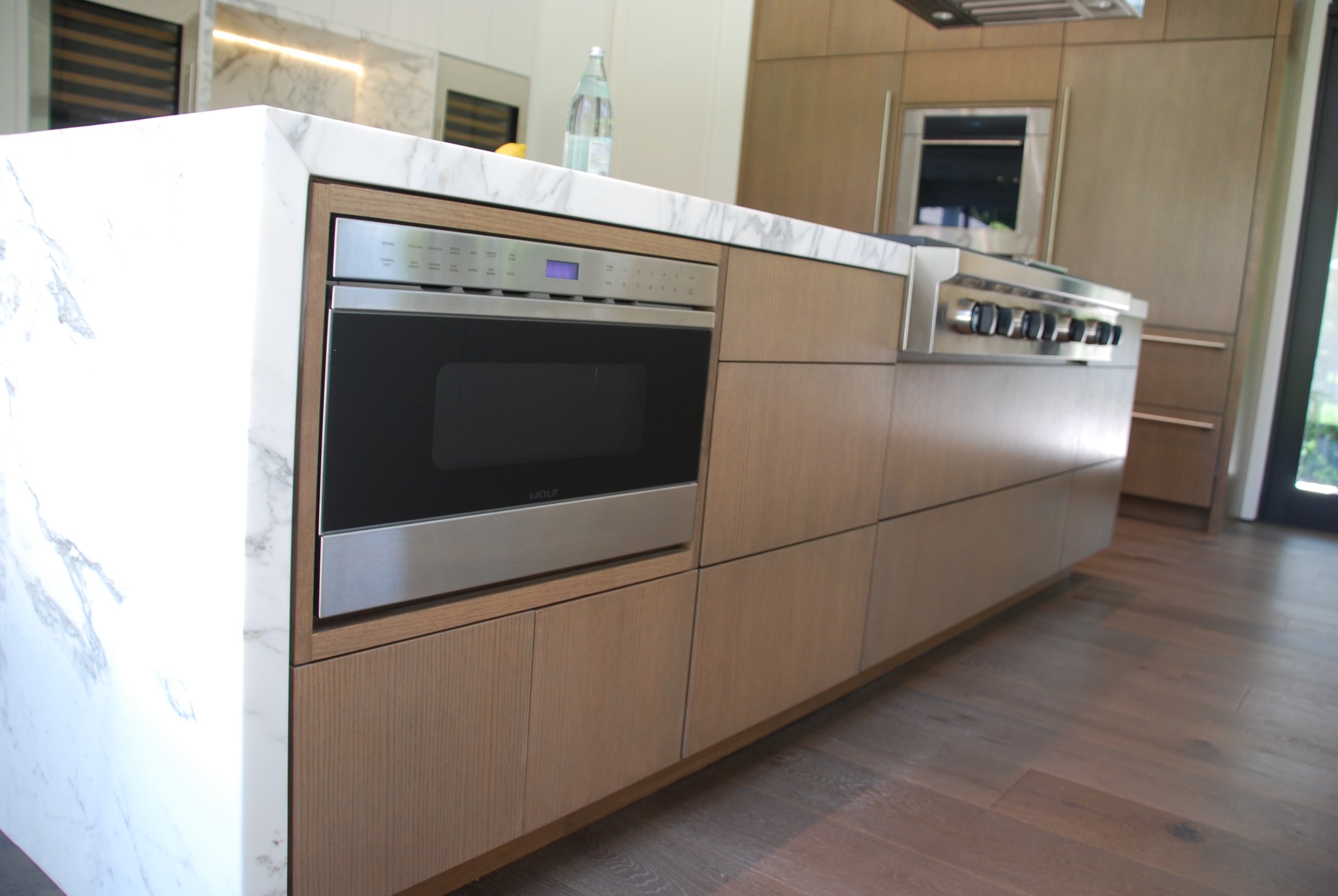
Appliance replacement may provide a greater improvement when the cabinetry and countertops are in good condition but the appliances are outdated, unreliable, or poorly suited to the kitchen.
Updated appliances can improve the kitchen’s appearance and everyday functionality. The strongest choice is not automatically the most expensive appliance package. The appliances should be appropriate for the home, the available space, and the way the kitchen will be used.
Before ordering appliances, confirm:
The exact appliance dimensions
Electrical and plumbing requirements
Ventilation requirements
Cabinet opening dimensions
Door and drawer clearances
Whether panels or trim kits are required
Appliance specifications should be confirmed before ordering new cabinetry or making permanent changes to the surrounding area.
Can Improving the Layout Provide a Better Return?
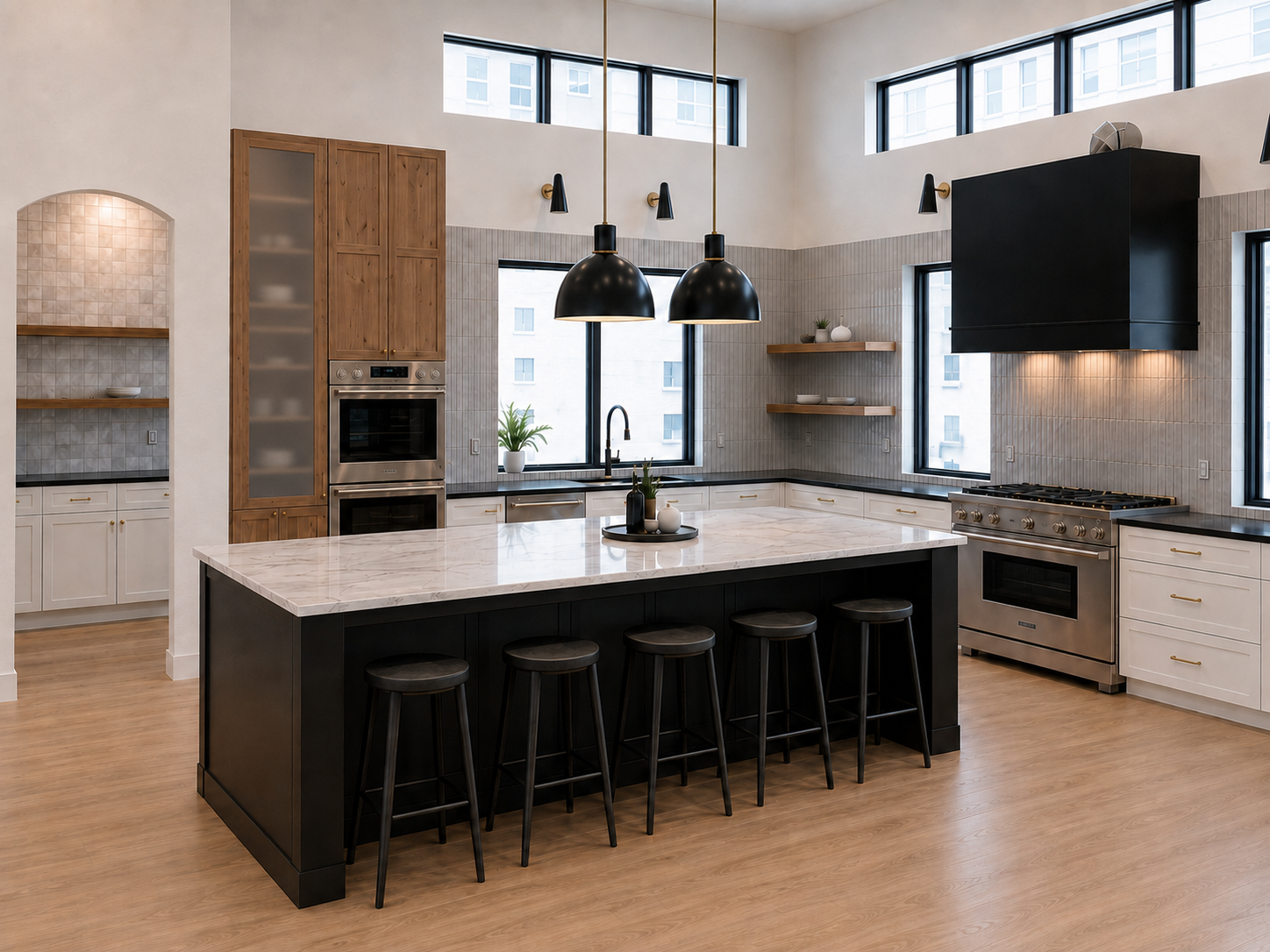
A kitchen may have attractive materials and still function poorly. In that situation, improving the layout may provide more value than replacing finishes alone.
Common functional problems may include:
Limited countertop space
Poor appliance placement
Inadequate storage
Difficult corner cabinets
Walkways that are too restricted
An island that is too large or too small
Doors and drawers that interfere with one another
Appliances that cannot open completely
Poor separation between cooking and cleanup areas
Correcting these problems can make the kitchen easier to use every day. However, major layout changes may also require plumbing, electrical, flooring, framing, and other construction work. The potential improvement should be compared with the additional cost.
Do Smaller Kitchen Upgrades Provide a Good Return?
Smaller improvements can provide a strong visual return when the main parts of the kitchen are already in good condition.
These upgrades may include:
Replacing decorative hardware
Improving task and general lighting
Updating the backsplash
Replacing the sink or faucet
Painting the walls
Updating outdated fixtures
Improving cabinet organization
Replacing damaged flooring
These changes are most effective when they support an existing kitchen that already functions well. They will not correct damaged cabinetry, insufficient storage, or a poorly designed layout.
Should You Complete a Partial or Full Kitchen Remodel?
A partial remodel may provide the better return when the kitchen’s major components are still in excellent condition. For example, updating the countertops, appliances, lighting, and hardware may create a meaningful improvement without replacing well-built cabinetry.
A complete remodel may be more appropriate when several parts of the kitchen need attention at the same time. Replacing the cabinets, countertops, flooring, and appliances together also allows the complete design to be coordinated before work begins.
A full remodel may make sense when:
The cabinetry is damaged or outdated
The layout needs to change
Several major materials require replacement
Appliances do not fit the existing cabinetry
Plumbing or electrical systems need to be updated
The kitchen does not match the quality of the home
The decision should be based on the kitchen’s actual condition rather than automatically choosing the smallest or largest possible project.
Avoid Upgrading the Wrong Part of the Kitchen First
The order of improvements matters. New materials should not be selected without considering how they connect to the rest of the kitchen.
For example:
New countertops may not be a wise first step if the cabinets will soon need replacement.
New flooring should be coordinated with any planned cabinetry or layout changes.
Appliances should be selected before cabinetry is ordered.
Lighting changes should be planned around the final cabinet and island layout.
A new backsplash should coordinate with both the countertops and cabinetry.
Planning the complete project before beginning individual upgrades can prevent one improvement from interfering with another.
How Do You Determine Which Upgrade Is Worth the Investment?
Begin by separating the kitchen into three categories:
Keep
These are elements that are in excellent condition, function properly, and support the finished design.
Improve
These are elements that can remain but would benefit from smaller updates, repairs, or cosmetic changes.
Replace
These are elements that are damaged, poorly designed, outdated, or unsuitable for the kitchen.
This process helps direct the budget toward the areas where it will create the greatest improvement. It also prevents usable materials from being replaced simply because another part of the kitchen needs attention.
Which Upgrade Provides the Best Overall Return?
The best kitchen upgrade is the one that addresses the most important weakness in the existing space.
If the cabinetry is damaged, outdated, or poorly designed, replacing it may provide the greatest improvement. If the cabinetry is in excellent condition, new countertops, appliances, lighting, or other targeted updates may provide a better return without requiring a complete remodel.
Return on investment should not be measured by price alone. A successful upgrade should improve the kitchen’s condition, appearance, functionality, and suitability for the home while avoiding unnecessary work.
Before deciding what to replace, evaluate the complete kitchen and determine which improvements will make the greatest difference.